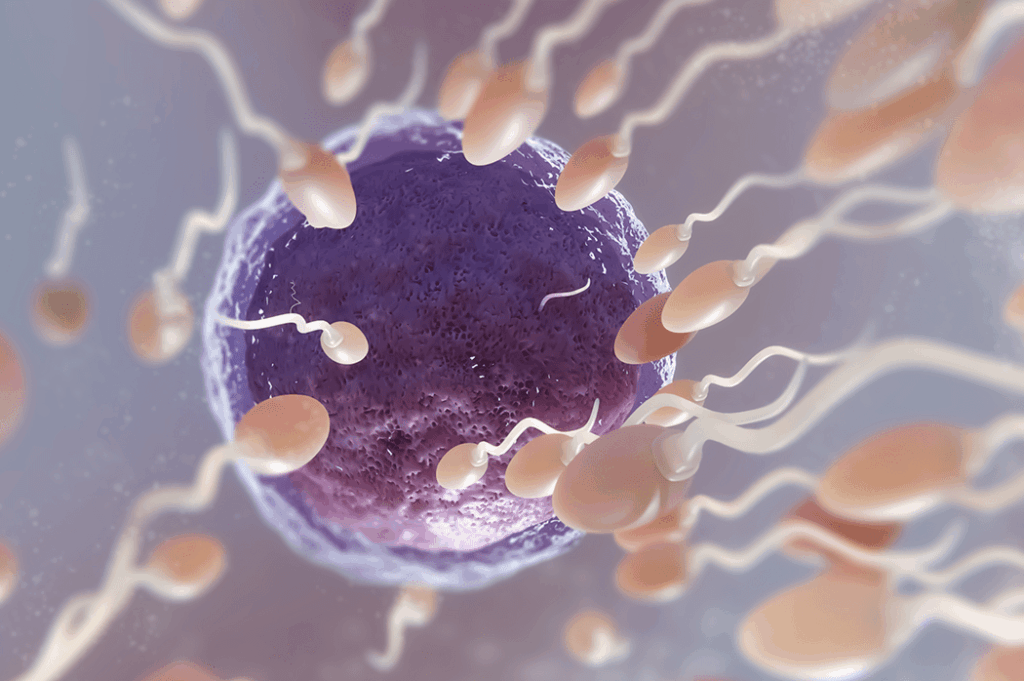
What Is the Journey of the egg Like? In the world of human reproduction, few cells are as extraordinary as the oocyte. This cell, considered the largest in the human body, has a complex structure and a developmental process that begins even before birth. Its maturation, transformation, and activation represent a true biological journey that, under the right conditions, allows the beginning of a new life. Understanding this process is not only fascinating from a scientific perspective, but also essential for those who want to learn more about their fertility and how their body works.
In this article, we will guide you step by step through how the oocyte is formed, how it develops, and how it finally becomes activated, highlighting its importance in the reproductive process.
The Oocyte: A Cell Designed for the Origin of Life
From the fetal stage, the oocyte begins a path full of changes, natural losses, and highly regulated processes. Everything begins between weeks 5 and 6 of gestation, when primordial germ cells migrate to the ovaries of the female fetus. From that moment on, their number increases rapidly: by week 20 of gestation, there are approximately 7 million oogonia.
However, this abundance is temporary. Even before birth, most of these cells are naturally lost, and by the time a baby girl is born, only about 1 to 2 million oocytes remain. This decline continues over the years: by puberty, around 300,000 survive, and only 400 to 500 will ever be ovulated during a woman’s reproductive life. With menopause, the ovarian reserve finally reaches zero.
This process demonstrates that the oocyte is a valuable and limited cell, whose journey is determined from intrauterine life.
The Structure of the Mature Oocyte
The oocyte that reaches ovulation is not only large, but also highly specialized. Each of its layers and components plays an essential role:
-
Zona pellucida: An external protective layer that allows recognition between the oocyte and the sperm.
-
Cytoplasm: Stores nutrients, growth factors, and many mitochondria, which are critical for the embryo’s first cell divisions.
-
Perivitelline space: The area where the first interactions with the sperm occur during fertilization.
-
Polar body: A by-product of meiosis that indicates that the oocyte has completed part of its maturation.
Each structure is finely designed to support the embryo during its earliest stages, even before implantation in the uterus.
The Awakening of the Oocyte: The Moment of Fertilization
Although the oocyte matures in the ovary and may be released during ovulation, it is not yet fully prepared to form an embryo. It remains in a state known as meiotic arrest, a biological pause that ends only when the oocyte comes into contact with a sperm.
During fertilization, the sperm releases enzymes that trigger intracellular calcium pulses within the oocyte. This signal is key to completing meiosis and transforming the oocyte into an ovum, now ready to merge with the male genetic material and start embryonic development.
This “awakening” marks the end of the oocyte’s journey and the beginning of a new stage: the formation of an embryo.
We Are the Best Fertility Clinic in the Mexican Caribbean!
At Advanced Fertility Center Cancun, we have a team of specialists who will provide you with the professional and compassionate care you deserve.
Now that we’ve shared a bit about the journey of the oocyte, we’d love to know what other questions you may have about Advanced Fertility Center Cancun that you would like our medical team to answer. Feel free to share them in the comments.
What other topics would you like us to cover on our blog?
Please write them in the comments below!
If you’d like to visit our clinic, you can contact us here:

Follow us on Facebook | Youtube