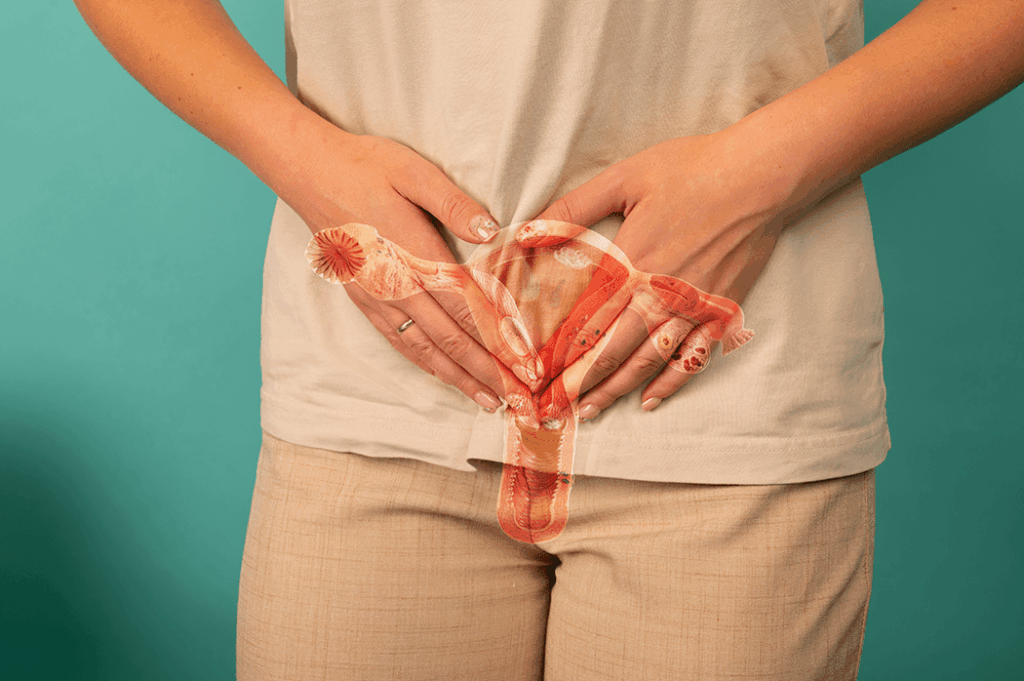
What Is Endometriosis? Endometriosis is one of the most common gynecological diseases and, at the same time, one of the most misunderstood. It is estimated that around 10% of women of reproductive age are affected, although many spend years without receiving an accurate diagnosis.
Despite its significant impact on physical, emotional, and reproductive health, endometriosis is still considered an “invisible disease,” because its symptoms are often normalized or mistaken for typical menstrual discomfort.
What Is Endometriosis?
Endometriosis is a chronic and inflammatory disease in which tissue very similar to the endometrium—the lining of the uterus—grows in places where it should not be. This tissue can be found in the ovaries, fallopian tubes, peritoneum, and in some cases, even in neighboring organs such as the bladder or intestines.
Even though this tissue is outside the uterus, it still responds to the hormones of the menstrual cycle, causing inflammation, pain, internal bleeding, and the formation of adhesions. Over time, these changes can lead to debilitating pain, digestive issues, discomfort during sexual intercourse, and difficulties achieving pregnancy.
Why Does Endometriosis Occur?
The exact cause is not completely understood, but several theories exist:
-
Retrograde menstruation, where menstrual flow travels to the pelvic cavity instead of exiting the body.
-
Genetic factors, as it is more common in women with close relatives who have been diagnosed.
-
Immune system alterations, which may allow this abnormal tissue to survive outside the uterus.
-
Coelomic metaplasia, a process in which certain tissues transform into endometrial tissue.
The most widely accepted understanding today is that endometriosis is multifactorial, influenced by genetic predisposition, hormones, and immune factors.
What Are the Most Common Symptoms?
-
Chronic pelvic pain
-
Very painful periods
-
Pain during sexual intercourse
-
Pain when having a bowel movement or urinating
-
Difficulty conceiving
It is important to note that the intensity of pain does not reflect the severity of the disease. Some women with mild lesions experience severe pain, while others with advanced disease may have very few symptoms.
Endometriosis and Infertility
Between 30% and 50% of women with endometriosis experience some degree of infertility. This may be caused by:
-
Inflammation in the pelvic environment
-
Alterations in fallopian tube function
-
Adhesions that affect the mobility of reproductive organs
-
Changes in ovarian quality or ovulation
Even so, many women with endometriosis are able to achieve pregnancy with medical support, whether through fertility treatments or conservative surgery.
How Is Endometriosis Diagnosed?
Diagnosis can be challenging and may take several years. Although laparoscopy is still the gold standard for confirmation, several useful studies can identify signs of the disease:
-
Specialized transvaginal ultrasound
-
Magnetic resonance imaging (MRI)
Early diagnosis can reduce pain, slow disease progression, and improve quality of life.
Three Treatment Options
Treatment is chosen based on symptoms, age, reproductive goals, and disease severity. The main options include:
-
Medical treatment with contraceptives, progestins, or medications that act on hormone regulation.
-
Surgical treatment, which may be conservative or more extensive depending on the case.
-
Expectant management, recommended in mild cases for those seeking spontaneous pregnancy.
Each case must be evaluated individually to avoid risks, such as the reduction of ovarian reserve after certain surgeries.
Endometriosis is a complex, chronic, and frequently underdiagnosed disease, but with proper management, women who suffer from it can regain their well-being and reproductive health. The key lies in personalized care, early diagnosis, and a treatment plan tailored to each patient’s needs.
Talking openly about endometriosis is essential to bring visibility to the condition and offer more women the opportunity to receive the care they deserve.
We Are the Best Fertility Clinic in the Mexican Caribbean!
At Advanced Fertility Center Cancun, we have a team of specialists ready to provide you with the professional and compassionate care you deserve.
Now that we’ve shared some information about how stress affects sperm quality, we’d love to know what other questions you may have about Advanced Fertility Center Cancun that you’d like our medical team to answer. Feel free to share them in the comments.
What other topics would you like us to discuss on our blog?
Please share them in the comments below!
If you’d like to learn more about our clinic, you can contact us here:
Follow us on Facebook | Youtube
We are located in Cancún, Mexico
Advanced Fertility Center Cancun – Fertility Treatments in Cancun